Peptide Purity Determination Creative Peptides-peptide Drug Exploration
Air Conditioning Peptide Testing Labs Third-party Peptide Evaluation
The dissolved peptide sample is injected right into a stream of liquid solvent (the mobile stage) that streams through a tube loaded with tiny bits (the stationary phase). Various molecules "stick" to those bits with different strengths, so they travel with the column at different speeds. Subtle distinctions in resources purity and structure can result in variances in the activity of the end product.Peptide In Vivo And Artificial Insemination Screening Services
- In addition, methods such as amino acid analysis and HPLC are utilized to validate the peptide's identification and pureness, making sure precise characterization for various applications.
- Contact us today to discuss your peptide series, example status, and analytical purposes.
- It serves as a reminder and legal please note that the product is not a restorative or palatable.
- Internet peptide web content describes just how much real peptide (by weight) is in the vial relative to non-peptide parts like water, counter-ions (e.g., TFA), or barrier salts.
Pinnacle Lab is a specialized vendor of high-purity chemical reagents and peptides. All items detailed are strictly for in-vitro lab research and development make use of only. Check out front runner research peptides with batch-specific COA documents and HPLC/MS confirmation. Products are for in-vitro research laboratory study use only and are except human consumption.
Study Uses Of Peptide Chemical & Physical Evaluations
Keeping a high degree of pureness is crucial due to the fact that contaminations can influence bioassays or reactions. For instance, abbreviated peptides or chemically modified side-products may bind to targets or produce negative effects that confuse your outcomes. Specially changed peptides or cyclic peptide sequences are tough to verify, which affects quality assurance. We incorporate LC-MS/MS and enzymatic digestion analysis to specifically confirm the sequence and alteration websites of non-natural modified peptides. Recurring natural solvents, metal ions, or byproducts from synthesis may cause toxic adverse effects.
Straight from the synthesizer with minimal processing-- commonly just cleavage from the resin and rainfall. Purity ranges commonly, from 40% to 80%+ depending on sequence size and trouble. Unrefined peptides are suitable for applications where pureness isn't essential, such as antibody production or first screening assays where the target peptide simply requires to be present, not dominant. Carefully related to truncations, removal peptides are unabridged chains that are missing one amino acid someplace in the center. If capping isn't completely effective, an uncoupled chain can remain to lengthen in succeeding steps, generating a peptide that's only one deposit short of the target.
Reward Components (marks Of A Top Quality Vendor)
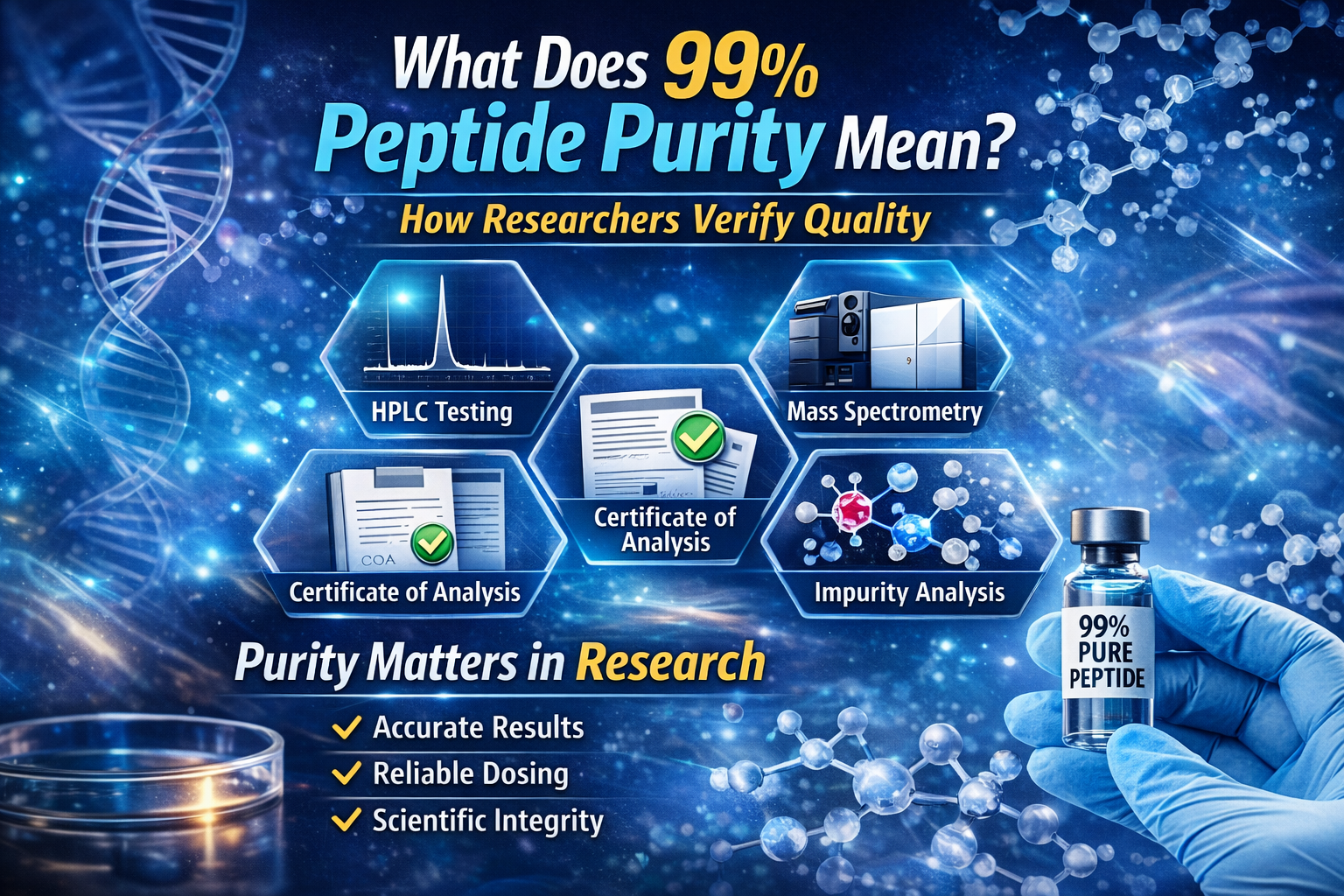
If the COA details "overall impurities", that matches the purity number (e.g., 98% pureness suggests 2% overall contaminations). Numerous COAs additionally define known or "defined contaminations" versus undefined ones, each with their specific percents if above a certain threshold. This degree of detail aids researchers understand if any type of small peptide by-products are present. If you see several big optimals of comparable height, you're checking out either a low-purity sample or a combination. If the major height has a noticeable "shoulder"-- a bump on one side-- that usually suggests a carefully relevant pollutant (like a removal peptide) that the column could not totally fix. The peptide is passed through a simple purification action (typically gel filtering Laboratory Standards or a quick reversed-phase clean-up) to eliminate salts, small-molecule results, and scavengers from the bosom step. 